
Nordic IT organisations are being hit simultaneously by the AI Act, NIS2, DORA, cloud sovereignty requirements, and a board that wants AI yesterday. The people being asked to make sense of all of it are infrastructure architects and security engineers. This is not what they signed up for.
Oslo, June 2026
There's a meeting happening in organisations across Norway right now. It's usually called something like "AI governance working group" or "digital sovereignty task force." In the room: someone from legal, someone from IT, someone from the business, and one increasingly anxious infrastructure architect who has just realised that the policies being discussed will land on their plate to implement.
Welcome to 2026.
The convergence no one planned for
The Nordic compliance picture this year is unlike anything that came before it - not because any single regulation is new, but because of what's arriving at the same time.
"The Nordics face a unique situation, with major compliance requirements such as the AI Act, NIS2, GDPR, and ISO 42001 all taking effect simultaneously. Yet many organisations still approach these frameworks as separate systems, which only adds to costs and complexity." - Twoday, Nordic AI Governance in 2026, February 2026
NIS2 is no longer coming - it's here. Denmark reached full compliance in July 2025. Finland has seven sector-specific authorities enforcing it. Sweden's Cybersäkerhetslagen entered force on 15 January 2026, and is widely regarded as one of the most comprehensive NIS2 implementations in Europe. Norway is targeting AI Act implementation for summer 2026.
At the same time, the broader wave of EU digital regulation is breaking. DORA applies to the financial sector from January 2025. The bulk of the EU AI Act obligations for high-risk systems land on 2 August 2026. The Cyber Resilience Act starts reporting requirements in September 2026. Seven overlapping frameworks, all live within roughly the same eighteen months.
The fines for getting it wrong are not abstract. Under NIS2, essential entities face penalties of up to €10 million or 2% of global annual turnover - and in serious cases, management can face personal liability and temporary bans from holding leadership functions.
The analysts have been watching
Deloitte's State of AI in the Nordics 2026 report - drawn from interviews with 170 senior executives across Denmark, Finland, Norway, and Sweden - paints a specific picture of where organisations stand:
55% feel prepared on infrastructure. Strategic preparedness: down to 43%. Talent preparedness: just 14%. - Deloitte, State of AI in the Nordics 2026
Read that again. Technical readiness is relatively strong. Strategic and talent readiness has collapsed.
That gap - between the capability to build things and the organisational capacity to govern them - is where the real risk lives right now. And it's not a leadership problem or a legal problem in isolation. It's an infrastructure problem. Because governance only has teeth when it's implemented, and implementation is infrastructure.
The sovereignty question is no longer abstract
Data sovereignty was a policy discussion two years ago. Today it's an architecture decision.
Where does this AI workload run? Which jurisdictions does that data touch? Who has legal access to it under what circumstances? If the model is hosted by a hyperscaler, what does that mean for NIS2 obligations? If the pipeline processes data under GDPR, what happens when it passes through a model you don't fully control?
These aren't questions a CTO can answer alone. They require someone who understands the architecture deeply enough to trace the data flows, the dependencies, the points of exposure.
Norway is better positioned than most to build answers to these questions. Significant data centre investment is underway - Statnett and regional grid provider Fagne are both building new substations to support expansion.
"The Nordics are proving increasingly well-positioned. The appeal is becoming increasingly practical rather than aspirational." - Techerati, Nordic Data Centres Move From Ambition to Execution, May 2026
But infrastructure advantage only translates into compliance advantage if the organisations consuming that infrastructure know how to leverage it. Right now, many don't.
The AI layer makes everything harder
Before AI, compliance had a relatively bounded scope. Data sat somewhere. It moved through defined systems. You could map it, audit it, demonstrate control over it.
AI breaks that model.
Netsecurity, who works directly with Norwegian critical infrastructure clients, was direct about the threat landscape shift:
"The upcoming NIS2 directive will extend requirements to more sectors and introduce significant sanctions for non-compliance. But the legislation describes minimum requirements, not sufficient protection. Businesses that only aim for compliance are already lagging behind in the face of a threat landscape that is evolving faster than the regulations." - Netsecurity, AI-driven cyberthreats to critical infrastructure, 2026
When an AI model processes queries about your systems, makes decisions inside your infrastructure, or interacts with your identity stack, the compliance surface area expands in ways that are genuinely new. The question of whether an AI-assisted incident response process satisfies NIS2's 24-hour early warning requirement, for instance, isn't a question that most legal teams or most infrastructure teams can answer alone. It requires both.
The organisations navigating this well are the ones treating AI governance as an infrastructure problem, not a policy problem - because that's ultimately where it lands.
The governance gap has a name now
The World Economic Forum put a frame on it earlier this year that cuts through a lot of noise:
"When AI becomes embodied, governance becomes infrastructure. AI governance - rather than raw technical capability - has become the decisive factor." - World Economic Forum, February 2026
That's the shift. Governance isn't a layer you add on top of infrastructure. In 2026, it is infrastructure. The people who design, build, and run these systems are the people being asked to make governance real - whether they were trained for it or not.
Jeffrey Snover - who spent thirty years building the infrastructure the industry runs on, and who now works on AI governance at Harvard's Berkman Klein Center - framed the operational challenge directly ahead of NIC 2026:
"AI is changing both what's possible and the effort required to reach what's possible - and those goalposts move every quarter. We need to be honest about that, hold our beliefs loosely, and share best practices for the balance that matters most: delivering results today while continually figuring out how AI can help us deliver them better." - Jeffrey Snover, NIC 2026 Keynote Speaker
The conversation that needs to happen
There is good thinking happening across the Nordic IT community right now, on both sides of this problem: people who have worked through what the regulations demand in practice, and people who have built infrastructure to support those demands. The problem is that those two groups aren't always in the same room.
That's the conversation NIC 2026 is designed to enable. Not sessions walking you through regulatory text you can read yourself. Practical, honest exchanges between people who have had to figure out what NIS2 actually means for their monitoring architecture, what cloud sovereignty requirements mean when you're making a hybrid architecture decision under budget pressure, and where AI governance policy meets the production system.
The frameworks are here. The questions are real. The people with the answers are, mostly, practitioners who've been working through it themselves.
October is the best time to find them all in one room.
The most expensive question
Somewhere in your environment lives a problem you have been tiptoeing around for years. You have googled it. You have found the forum thread from 2019 where the last reply is "did you ever fix this?" (nobody did). You may even have paid someone who looked at it, nodded slowly and said "it depends".
It is still there. It is still costing you. And it is probably the most expensive question you have never asked.
Here is your chance.
Experts Unleashed
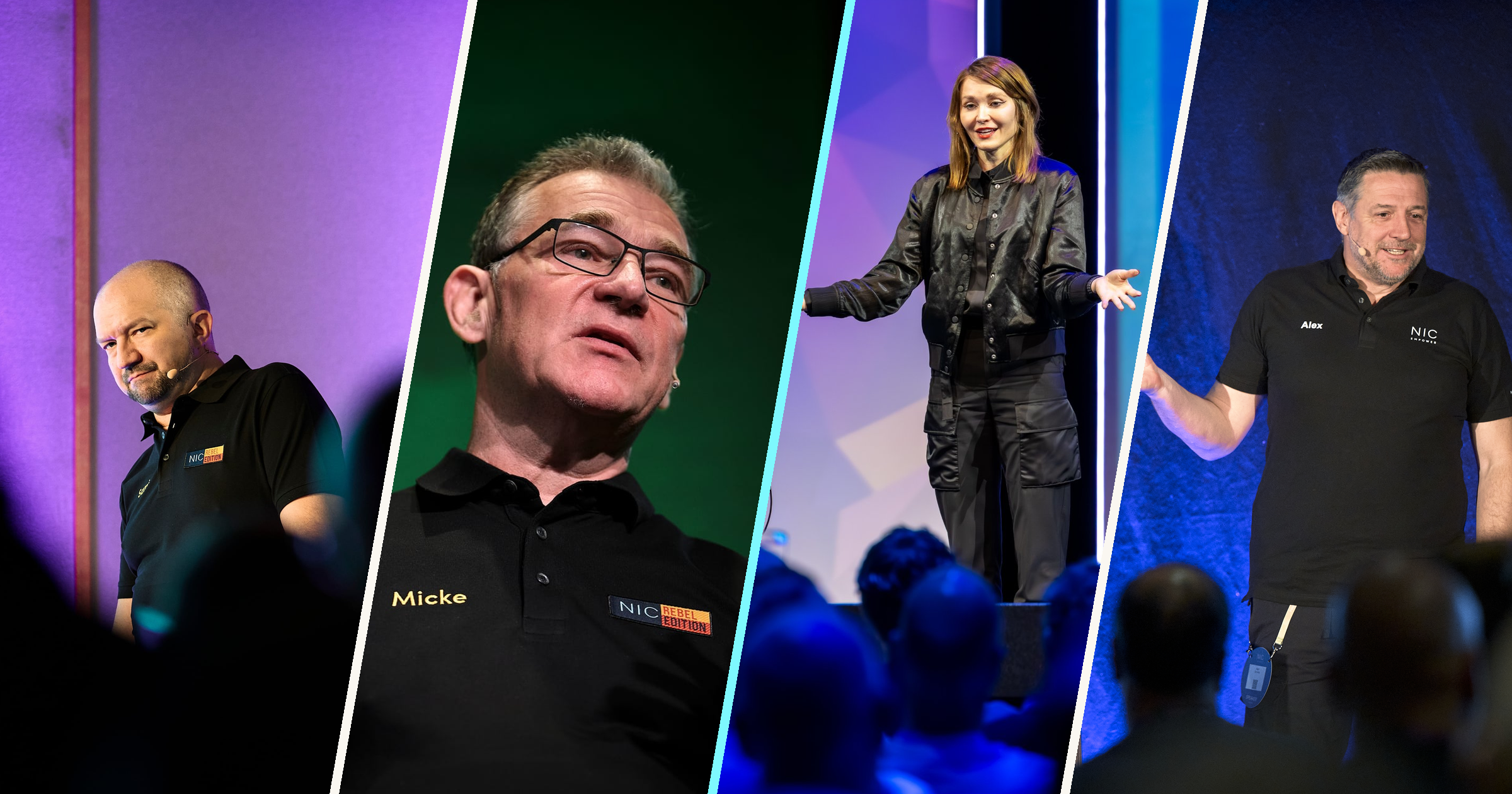
A brand new session at NIC 2026, and the only one where you write the agenda. You send the questions, we pick the best, and Sami Laiho, Mikael Nyström and Paula Januszkiewicz answer them live. Three experts, one stage, zero diplomacy. You will want to be in the room when they walk on.
Alex de Jong hosts, which means someone is in charge. In theory.
No slides. No sales pitch. One house rule for the experts: if you say "it depends", you explain what it depends on. They agreed. Mostly.
Questions to settle once and for all
Every team has that one discussion that keeps coming back, like a recurring meeting nobody dares to cancel. Cloud or on-prem. Whether anyone has opened the logs since go-live. Send it in and let the experts settle it, on stage, with witnesses. Then quote them in your next meeting and enjoy the silence.
The conversation you usually miss
You know the talks that happen when the laptops are closed and the experts finally say what they really think? Usually you hear about them the next morning, secondhand.
This time you are in it. Late in the day, nobody in a hurry, and your question on the table.
Your question, please
Be specific. "Is the cloud secure?" goes straight in the bin. "Why does this break every time we patch?" has a real shot. Anonymous is fine. We will not tell your boss.
When and where
You will find it in the agenda.
The answers will not be online. No slides, no recap. If you want them, you know where to be.
Submit your questions here: https://forms.cloud.microsoft/e/MJER6RZm5w
We need less technology, not more: Marius Sandbu on complexity as the real risk
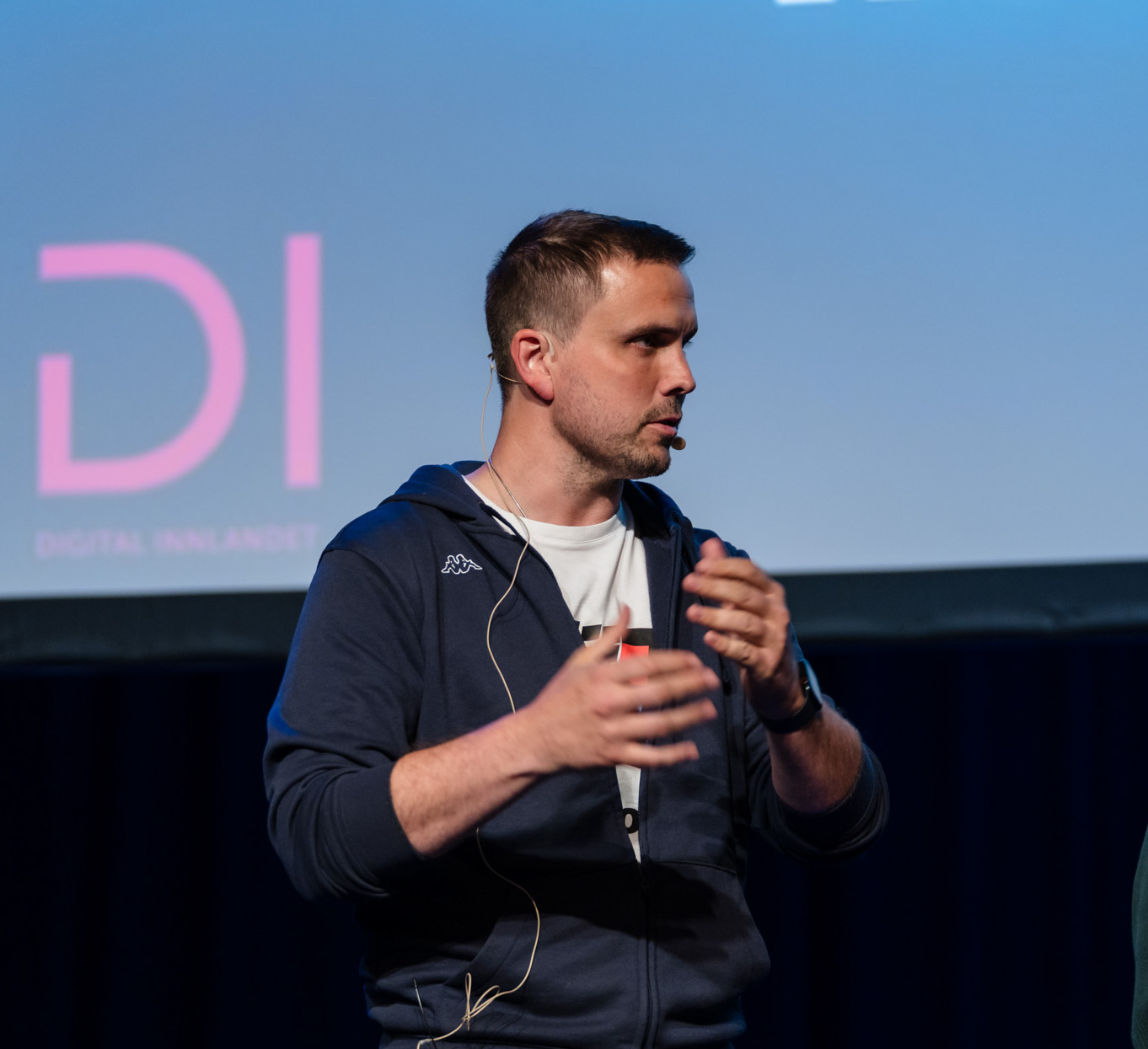
(Foto: Digital Innlandet v/Nina Knutsen)
NIC 2026 SPEAKER SERIES "5 questions with"
Fourth in our Speaker Series: Marius Sandbu, Cloud Evangelist at Sopra Steria and Azure AI MVP. We're putting the same five questions to the practitioners leading sessions at NIC 2026 this October, people who spend their working lives in the trenches rather than on a stage.
What do you believe that most of your peers would disagree with?
We need less technology, not more. We keep adding security products, monitoring tools, management platforms, and now AI, on top of everything else. Every new problem seems to result in another product. At some point, complexity becomes the biggest problem.
What do teams still accept as normal, even though it creates unnecessary risk?
Far too much permanent access. Admin accounts, service accounts, applications and APIs often get permissions because they needed them once, then keep them forever. Now we're adding AI agents with identities and permissions of their own.
When did something last go wrong that genuinely surprised you, and what changed afterwards?
What surprises me most these days isn't when technology fails, it's when it works exactly as designed and still creates a problem. Especially with AI agents. Give an agent an objective, some data, and access to tools, and it might find a perfectly logical way of achieving that objective nobody anticipated. That's changed how I think about automation. We used to test whether something could perform an action. Now we also need to test what happens when it gets creative about how it performs it.
What is one thing someone can change on Monday morning without waiting for a project, budget, or permission?
Delete something. An old admin account, an application nobody uses, a forgotten API key, software last opened in 2019. Security conversations tend to start with what we should buy next, but removing attack surface needs no budget or project, just someone willing to ask whether a thing still needs to exist. Find one, confirm nobody depends on it, and get rid of it.
What will people experience at NIC that they cannot get from a blog post or webinar?
You can read documentation, watch webinars, and ask AI to explain almost anything these days, but that doesn't replace meeting someone who's actually tried it in production and hearing: "Yeah, we did that. Don't do that." NIC brings together people who build, operate, and occasionally break real environments. The presentations give you ideas, but the discussions, questions, and shared war stories give you context.
Marius is on the Public Cloud track with Who Broke Production? Ask the Agent, a hands-on look at how Microsoft's new managed AI agent assists with troubleshooting and diagnosing failures in Azure, reasoning through signals across the environment, and how to configure and extend it with Skills, MCP integrations and sub-agents. Thursday at 3:40pm, Room 3.
-101.jpg)
Comfort is not security: Paula Januszkiewicz on why a clean report can still be wrong
NIC 2026 SPEAKER SERIES "5 questions with"
We have put the same five questions to the practitioners leading sessions this October, people who spend their working days in the trenches rather than on a stage. Third up: Paula Januszkiewicz, Founder and CEO of CQURE, back on the security track with two deep technical sessions on identity and forensics.
What do you believe that most of your peers would disagree with?
I'm not sure this would be controversial among my peers, but I think we still overestimate what tools and formal security checks can guarantee. I've seen organizations with mature security stacks and recent penetration tests still suffer incidents, simply because important weaknesses were missed. That's why the quality of testing matters so much. A superficial test can be worse than people realize, because it creates comfort without necessarily creating security. For me, the strongest teams aren't the ones with the most tools or reports, but the ones that keep questioning what they may still be missing.
What do teams still accept as normal, even though it creates unnecessary risk?
Teams get used to complexity very quickly. A temporary exception stays for years, someone keeps access they no longer need, or an old protocol remains because one application still depends on it. Each decision may have been perfectly reasonable at the time. The problem comes later, when dozens of these small exceptions start connecting and nobody has the full picture anymore. That's where unnecessary risk builds up. For me, the key is regular review: not asking who made a bad decision, but simply, "Do we still need this today?"
When did something last go wrong that genuinely surprised you, and what changed afterwards?
What still surprises me isn't usually the attacker's technique. After years in incident response, the patterns are familiar. The surprise is how often simple questions become difficult during a real investigation: when did this start, which account was used, where did the attacker move next, what data was touched? Sometimes the answer isn't available because the right logs were never collected or retained. That's changed how I think about readiness. Incident response doesn't begin when the phone rings. It begins earlier, with logging, telemetry, retention, and knowing what evidence your systems can actually give you.
What is one thing someone can change on Monday morning without waiting for a project, budget, or permission?
Choose one privileged account and follow it properly. Not in a policy document, but in the real environment. Where can it log on? What groups is it in? Which systems trust it? Is it used interactively? Could its credentials end up on a workstation or server where they should never appear? This exercise takes much less effort than a large security programme, but it often exposes surprising dependencies and old assumptions. You don't need a new budget to improve security. You can start by understanding one important access path better than you understood it on Friday.
What will people experience at NIC that they cannot get from a blog post or webinar?
At NIC, people will see things happen live, not just hear the polished conclusion afterwards. We can follow an attack path as it develops, inspect what the operating system is actually doing, look at where credentials appear, and use forensic artefacts to piece together what happened step by step. That matters because real environments rarely behave exactly like a diagram or a blog post. Something unexpected always comes up. NIC also has a very technical audience, so we can stop, dig into those surprises, challenge assumptions, and go much deeper than we normally could in a webinar or recorded session.
Paula is on the security track twice, both Wednesday in Room 1: Breaking Identity at Scale: From DPAPI & TBAL Secrets to Full Domain Compromise at 1:20pm, and Windows Knows What You Did: Deep Dive into Automatic Destinations at 4:00pm.